
SEO and AIO Promotion for an Online Store
For an online store, organic search is the cheapest acquisition channel with the highest conversion rate. But the rules have changed: Google AI Overviews, ChatGPT Shopping and Perplexity now recommend specific products and stores directly inside the answer — with no visit to a results page at all. We build your store's presence in both classic Google and AI search.

Why E-commerce SEO Is a Separate Discipline
An online store is technically the hardest type of site to do SEO for. Thousands of product pages, dynamic filters, duplicates from URL parameters, pagination, a complex category tree — all of it systematically gets in the way of indexing and ranking. Classic SEO does not work here without a specialized approach.
In parallel, buyer behavior is shifting. ChatGPT Shopping already shows products with photos, prices and reviews right inside the chat — and those recommendations are built on Google Shopping data and the site's structured data. Stores that are not optimized for that format simply never appear in AI results.
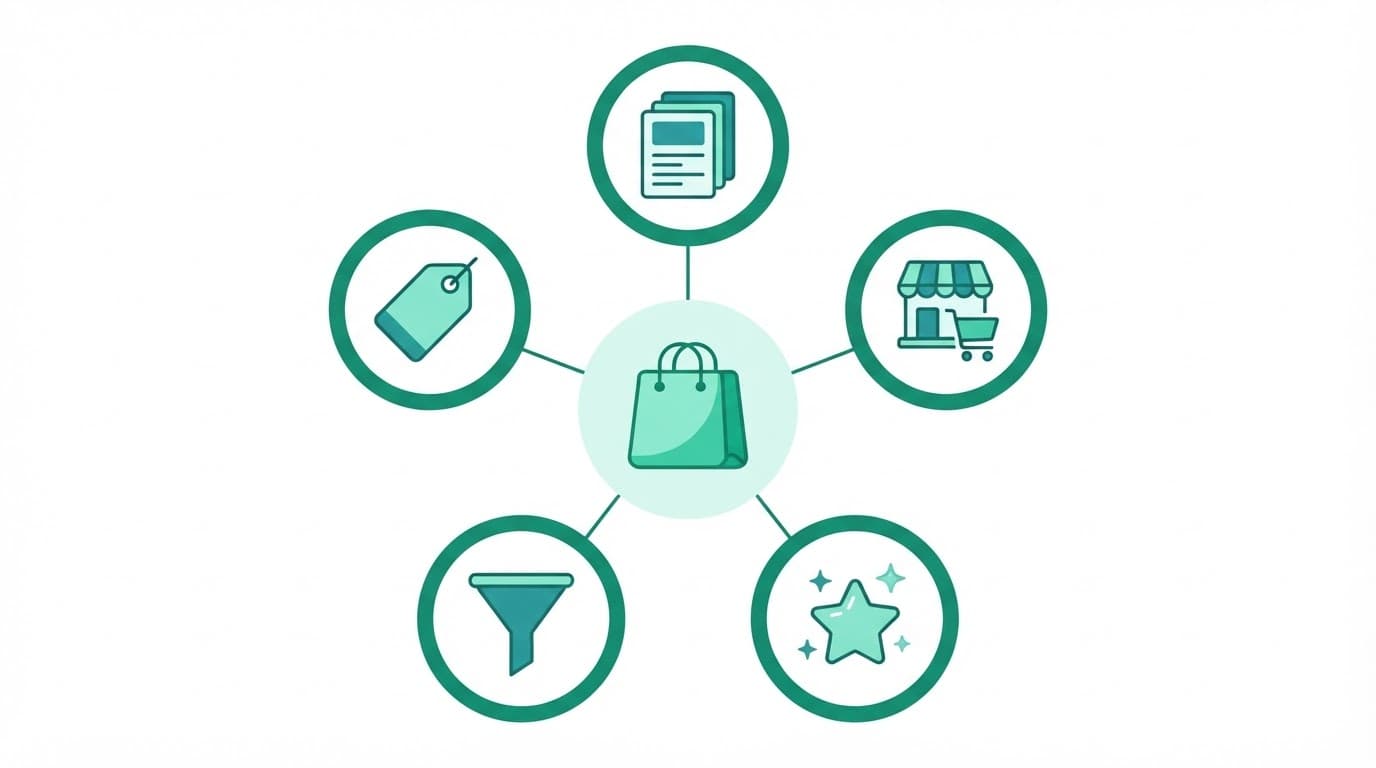
Key growth points for an online store
Category pages
The primary source of organic traffic. Most stores have empty or weak category copy. An optimized category with the right semantics and structure delivers 3–5× more traffic without building a single new link.
Product pages
Entry points for long-tail queries and AI citations. ChatGPT and Perplexity pull data from product pages to build recommendations — so a unique description, filled-in specifications, reviews and Schema.org markup become a direct factor in whether you appear in AI results.
Google Shopping and Merchant Center
A product feed with properly filled attributes is the foundation for AI recommendations in ChatGPT Shopping. Semrush confirmed it: ChatGPT pulls product carousels straight from Google Shopping.
Filters and faceted navigation
Mishandled filters create thousands of duplicates and eat up the crawl budget. Fixing this one problem produces an immediate effect on visibility.
Customer reviews
Rating and review count in Product + AggregateRating markup put the product into rich snippets and act as a quality signal for AI systems when they build recommendations.
What We Do for an Online Store
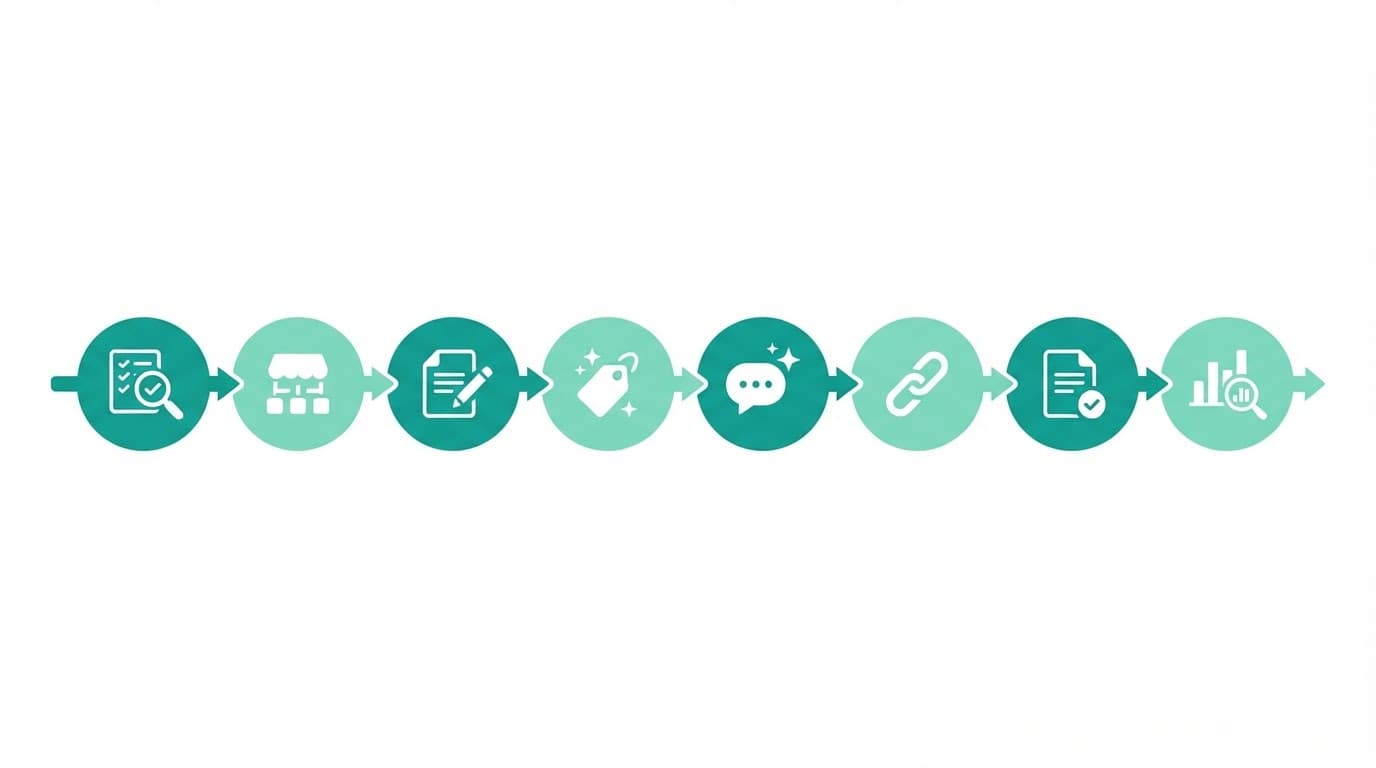
Eight stages of work — from a technical audit of the catalog and semantics mapped to the store structure, through the product feed and AI recommendations, to reporting on revenue from the SEO channel.
- 01
Technical audit for e-commerce specifics
A crawl-budget audit: how many pages Google actually indexes and whether it spends that resource on pages that matter. We find and close duplicates from filters and URL parameters with
canonicalandnoindex. We check pagination, internal link structure, and the load speed of category and product pages.For large stores (10,000+ SKUs) this is a priority of its own — without it SEO will not get off the ground.
- 02
Semantics mapped to the store structure
We build the complete semantic core: commercial queries for categories (buy laptop Kyiv), transactional ones for product pages (iPhone 15 Pro 256gb price), informational ones for the blog (which laptop is better for work). Every category, subcategory and product page gets its own semantic focus with no cannibalization. We build a correct URL hierarchy and internal linking between levels.
- 03
Category and product page optimization
For categories: unique SEO copy written for buyer intent, correct title/meta/H1, clean filter URLs where needed, internal links to adjacent categories.
For product pages: a unique description (not a copy from the manufacturer), filled-in specifications, customer reviews, and Schema.org Product + Offer + AggregateRating — a hard requirement for appearing in Google Shopping AI and ChatGPT recommendations.
- 04
Google Shopping and Merchant Center
We optimize the product feed: product titles with keywords, correct Google categories, complete attributes (GTIN, MPN, color, size, material). A clean, detailed feed is a direct precondition for products appearing in ChatGPT Shopping and Google AI results. We set up automatic feed updates.
- 05
AIO/GEO: your store in AI recommendations
We optimize content for the AI-citation format: product comparison blocks, answers to buyer questions in FAQ form with Schema.org FAQPage, and authoritative category descriptions. We configure IndexNow for Bing — that is how you reach the ChatGPT and Copilot audience. The goal: when a user asks “which vacuum cleaner should I buy under $150”, the AI names your store and your product.
- 06
Content strategy and blog
Informational traffic from the blog warms up buyers at the top of the funnel and supplies internal links to categories and product pages. We write reviews, comparisons and buying guides targeting queries that lead to a transaction. This material also gets cited heavily by AI systems.
- 07
Link profile building
We earn links from topical review sites, price aggregators and media. For e-commerce, mentions of the store brand and of individual products on authoritative resources are especially valuable — they signal to AI that your store can be trusted.
- 08
Analytics and reporting
Every month: organic traffic by category and product page, organic conversion rate, revenue from the SEO channel (via GA4 e-commerce tracking), rankings for target queries, and visibility dynamics in GSC. You see the direct link between SEO work and sales.
Expected Results
The typical trajectory for an online store with properly built SEO looks like this:
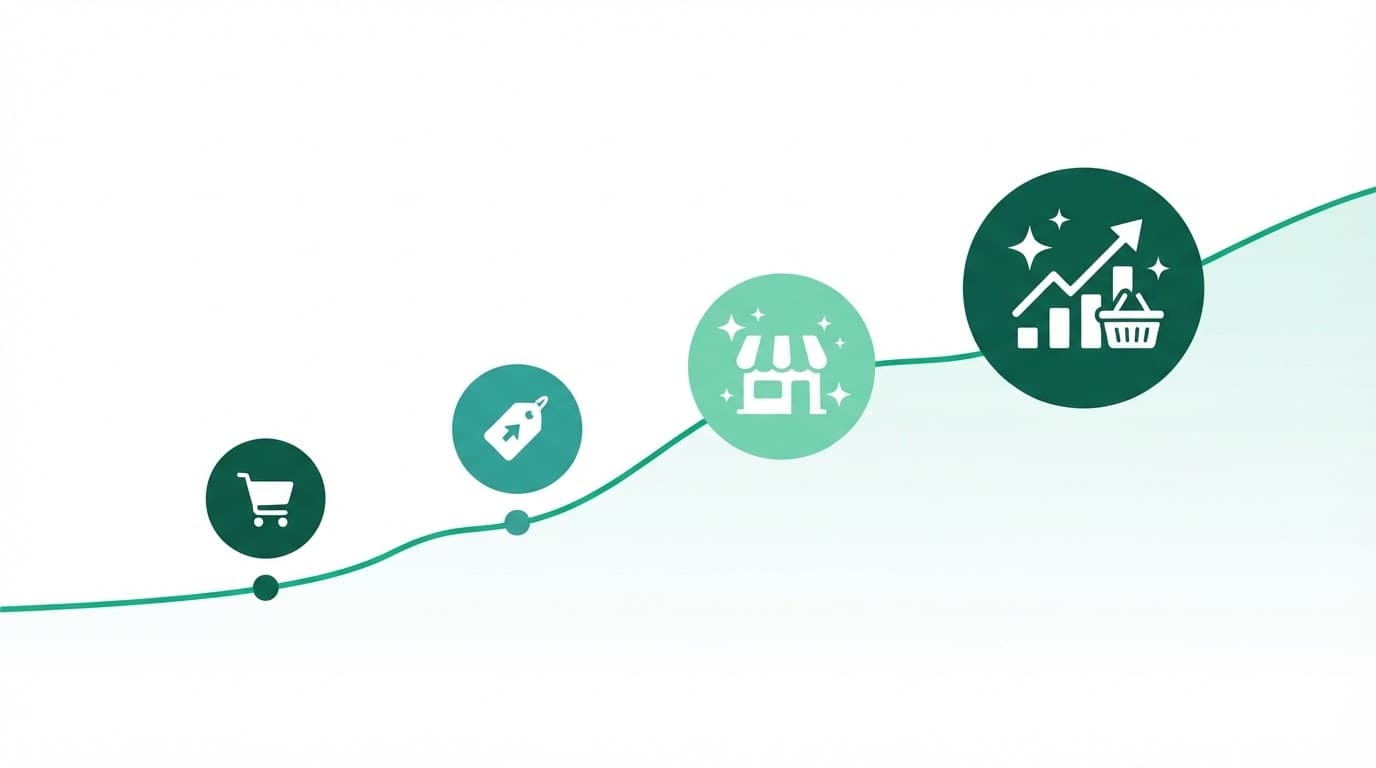
- Months 1–2First ranking movements and improved indexing after the technical fixes.
- Months 3–5Growth in organic traffic to category pages.
- Months 5–9A steady flow of sales from organic search and the first AI citations of your products.
For large stores with many categories the effect scales: every optimized category adds an independent stream of traffic.
Who It Is For
This service suits online stores with a catalog of 100+ SKUs that want to reduce their dependence on paid advertising; stores that already have traffic but poor organic conversion; new e-commerce projects that need the right architecture from the first steps; and stores with large catalogs (1,000–100,000+ SKUs) where technical problems are blocking indexing.
If your niche is different, the core tracks stay the same — only the strategy changes:
- SEO website promotionTurnkey classic SEO: technical audit, semantic core, on-page optimization, link building and monthly reporting.
- AI Optimization: AIO and GEOBrand promotion inside ChatGPT, Gemini and Perplexity answers — a standalone service for any niche.
- SEO for an agriculture storeSeasonal semantics, seed and crop-protection categories, a B2B section for farmers and agribusinesses.
- SEO for a wholesale websiteB2B semantics, partnership-terms pages and a catalog with wholesale filters for importers and distributors.
Frequently Asked Questions (FAQ)
How long does SEO for an online store take?
For stores with hundreds of categories, first results come within 2–3 months. Substantial growth in sales from organic search — within 5–9 months. Large catalogs need more time because of the sheer volume of work, but the effect scales accordingly.
Can ChatGPT recommend products from my store?
Yes. ChatGPT Shopping builds its recommendations on the Google Shopping feed and the structured data of your product pages. If your feed is optimized and your product pages carry Schema.org markup with ratings and reviews, your products make it into AI recommendations.
What matters more: optimizing categories or product pages?
Both levels are critical. Categories deliver the bulk of traffic on commercial queries. Product pages deliver long-tail traffic and are the direct entry point for AI citations. We start with categories and fix the technical problems of product pages in parallel.
Does an online store need a blog?
Yes, if competitors already capture informational traffic in your niche. A blog warms up the audience at the consideration stage and supplies internal links to categories. On top of that, AI systems cite comparison and review material actively.
Will traffic drop if we stop SEO?
Unlike paid search, rankings persist after a campaign stops. Traffic declines gradually over 3–6 months if competitors keep investing. That is exactly why SEO is an ongoing process, not a one-off service.
Order Promotion for Your Online Store
Send us a request — we will analyze your store's visibility in Google and AI search for free and show you concrete growth points.
Get a store audit